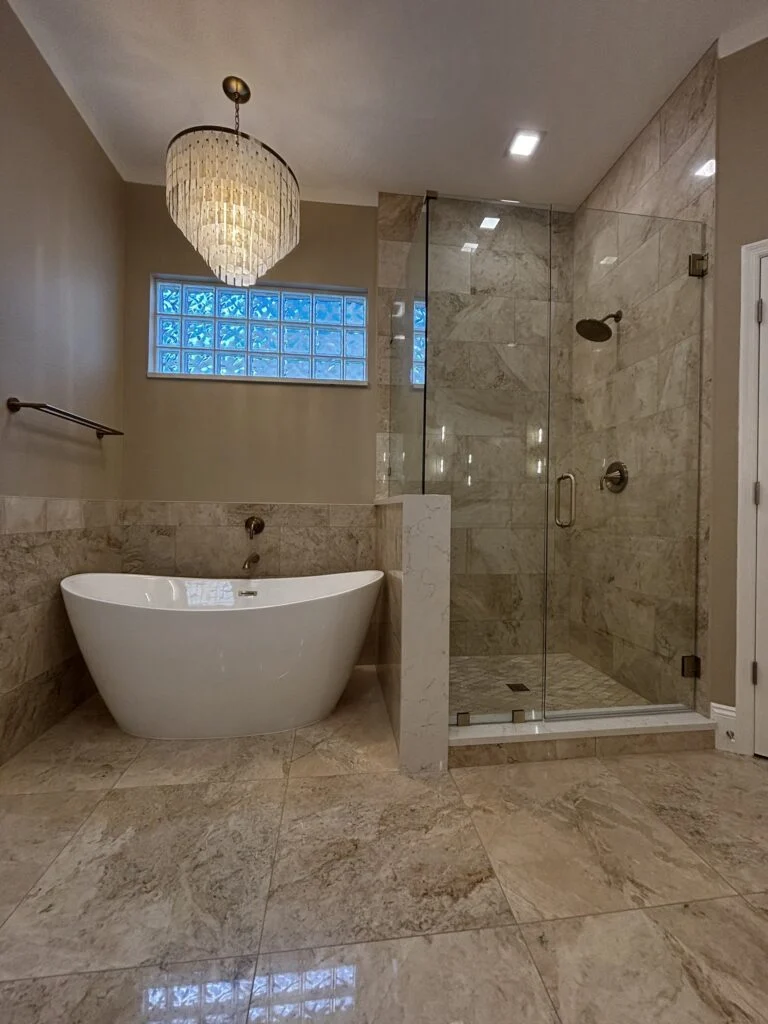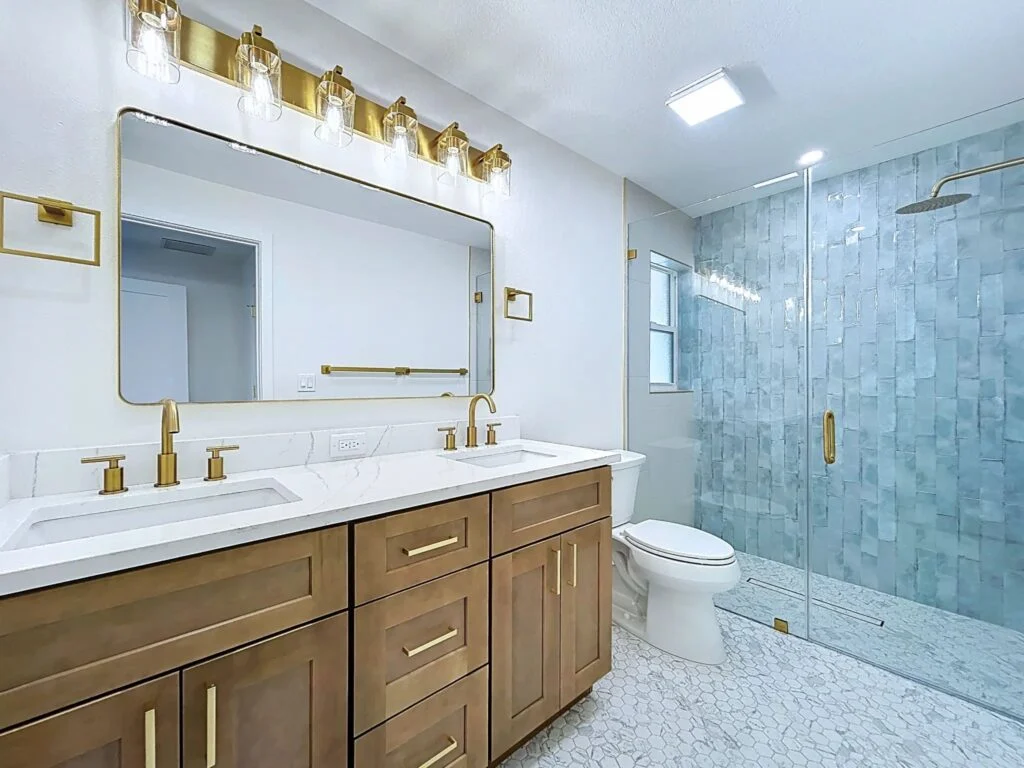
If nobody in the house takes baths, a walk-in shower is almost always the better use of the space. If you’ve got young kids, bathe a dog, or you really do soak in the tub at night, keep a tub somewhere in the house. That’s the simple version. Below is how I walk homeowners through it, what each option costs with us, and the details that matter more than the choice itself.
How do I decide between a tub and a walk-in shower?
I ask one question first: how does this bathroom actually get used, every day, by everybody? Not how it looks in a magazine. A lot of people keep a tub they haven’t sat in for ten years because they think they’re supposed to. Others rip one out and then realize it was the only tub in the house and they have a toddler.
- Families with young kids: keep at least one tub in the house. It doesn’t have to be in every bathroom.
- Empty nesters and couples: most go with a walk-in shower. It’s quicker, easier to get in and out of, and easier to clean.
- Real soakers: if you take baths, keep the tub. In a big enough primary bath, do both.
- Planning to stay a long time: a low or no-curb shower with a bench and room for grab bars later is the bathroom you won’t have to redo at 75.
What does a tub-to-shower conversion cost?
With us, a tub-to-shower conversion starts at $23,000, and most land between $23,000 and $28,000. A hall bath that keeps the tub, with a new tile surround and no shower glass, starts at $17,000, and a primary bathroom starts at $32,000. The $17,000 hall-bath starting point assumes you buy the tile and fixtures yourself. When we supply everything, most hall baths start around $21,000. Your written estimate spells out which materials are yours and which are ours.
The conversion costs more than a hall bath that keeps its tub because it’s a full tiled shower built from the studs out: demo, the shower pan, waterproofing, cement board or membrane, tile, grout and glass. That’s where the money goes, and it’s the part worth comparing line by line between quotes.
What do the shower upgrades add?
- A niche: about $400. A bench: about $550.
- Shower glass: about $2,100 for a standard swinging glass door. Sliding and oversized glass cost more.
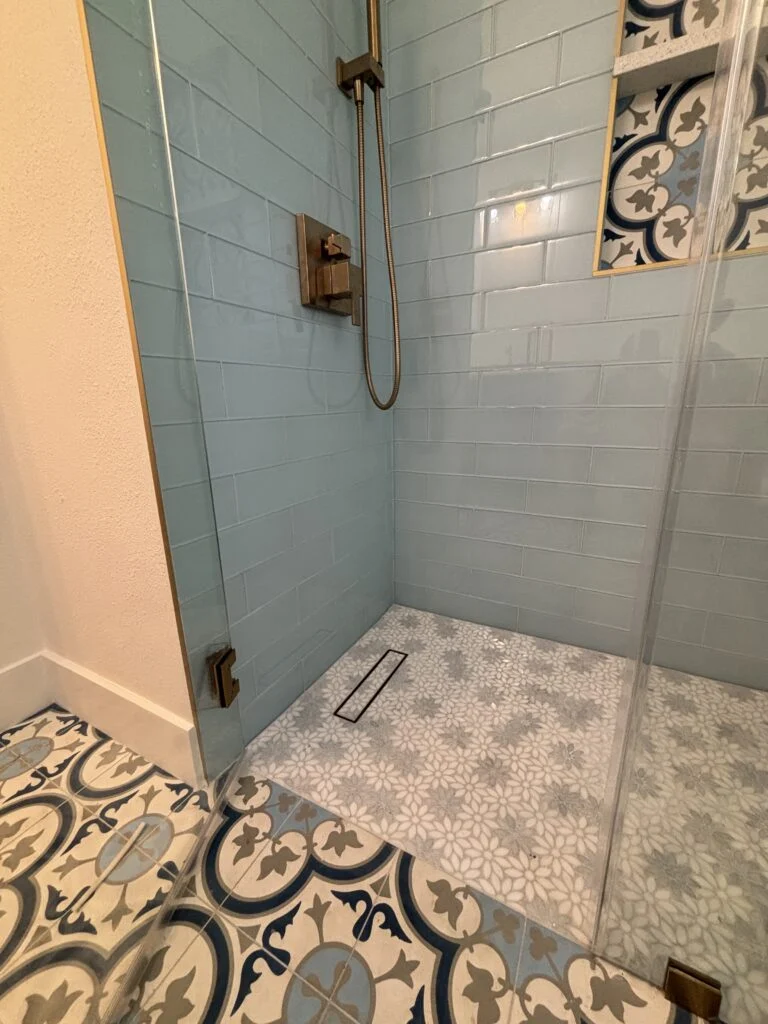
- Curbless entry: usually adds $2,500 to $3,500, because the floor has to be lowered or rebuilt so the shower floor slopes to the drain without a curb.
- A linear drain: a few hundred dollars more than a standard drain, and it makes curbless and large tile work better.
- A dual valve with a handheld: the most common upgrade, and the one I recommend if anyone in the house will ever sit down to shower.
Curbless is the one with a story. On a St. Petersburg job, the shower area was already sitting a little lower than the rest of the floor, so going curbless was easy and cheap. On a lot of slab homes it’s real concrete work. I’ll tell you which one you’ve got when I see it.
What about keeping both a tub and a shower?
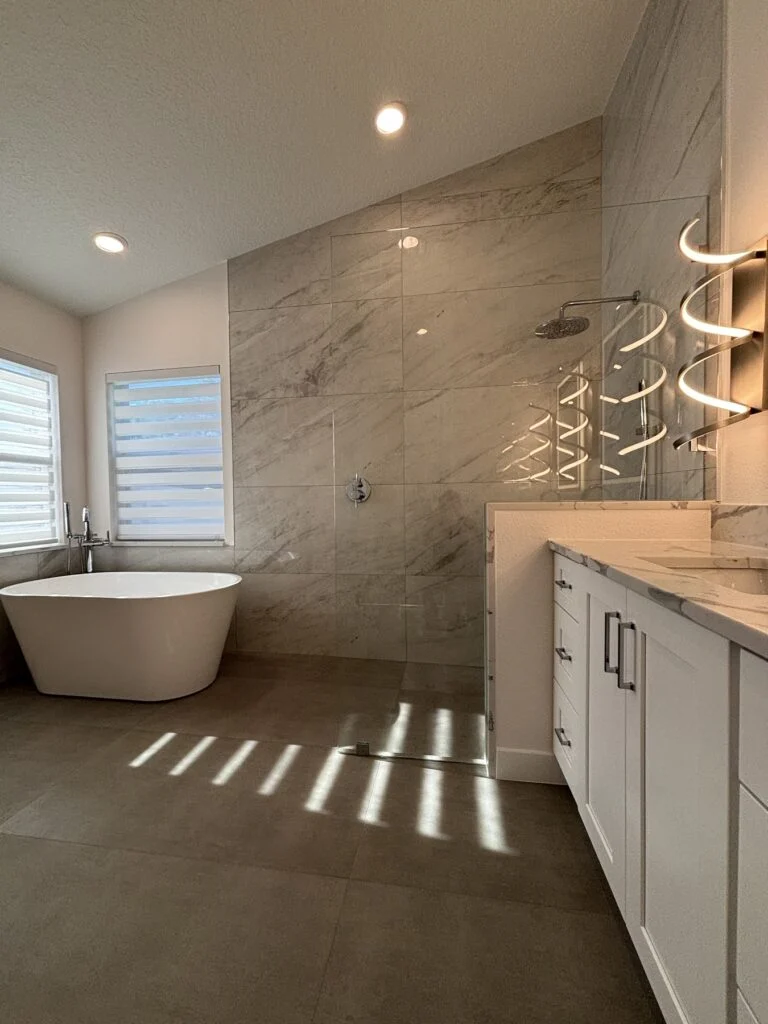
If the room is big enough, a separate shower and a freestanding tub is the nicest version of a primary bath. Just know that moving a tub to a new spot means moving the drain and the water supply, usually under the slab. On the Oldsmar bathroom above, the tub got its own spot with new supply lines run under the slab and a specialty drain. It’s worth it if you’ll use it. It’s a lot of money for a decoration if you won’t.
Does taking out the tub hurt resale?
It can, if it’s the only tub in the house. Plenty of buyers with kids want one. If you have two or more bathrooms, converting the primary to a walk-in shower and keeping a tub in the hall bath is the balance I usually recommend. If you’re in a 55-and-up area or a condo building full of retirees, a walk-in shower is usually the selling point, not the drawback.
What details matter more than the tub-or-shower choice?
- Waterproofing. A tiled shower is only as good as what’s behind the tile. Ask any contractor exactly what system they use behind the walls and under the pan.
- Slope. The floor has to slope to the drain the whole way. Standing water in the corner means it was built wrong.
- Ventilation. Our humidity is hard on bathrooms. A fan that actually vents outside matters more in a walk-in shower than with a tub and curtain.
- Bigger tile, fewer grout lines. Easier to clean, which is the whole point for most people going to a walk-in.
- Blocking in the walls. Even if you don’t want grab bars today, have wood blocking put in now. It costs almost nothing while the walls are open.
How long does a tub-to-shower conversion take?
Usually 3 to 4 weeks on site with us. Demo and plumbing take the first few days, then the shower pan, waterproofing and an inspection if the work is permitted, then tile, fixtures and glass. The glass is measured after the tile is finished, so it’s the last piece in. We don’t start demo until every material is confirmed to arrive inside the schedule window, so you’re not without a shower while we wait on a valve or a vanity. If it’s your only bathroom, tell us up front and we’ll plan around it. More in how long a bathroom remodel takes.
Do you need a permit?
A conversion that moves the drain or changes the valve usually does. We pull the permit and schedule the inspections as part of the job. In a condo, the board will usually want to see the scope too; here’s what your condo board will ask for.
How do you pick tile and fixtures?
Start with the shower wall tile, then the floor, then the valve and fixture finish, then the glass. You can browse the tile, vanities and fixtures we use in our Design Portal. If you’re planning for the long haul, our guide to aging-in-place bathroom design covers benches, grab-bar blocking and curbless entries.
Who is this kind of remodel not right for?
If you just need new caulk, a new faucet or a reglaze on the tub, you don’t need us, and I’ll tell you that. If your budget is well under $17,000 for the whole bathroom, we’re probably not the right fit either. But if you want the shower built right from the studs out, with a permit when it needs one, that’s exactly what we do.
Frequently asked questions
How much does it cost to convert a tub to a walk-in shower?
With us, tub-to-shower conversions start at $23,000, and most land between $23,000 and $28,000. Your estimate shows whether tile and fixtures are included or supplied by you.
Is a curbless shower worth it?
If anyone in the house has trouble with steps, or you plan to stay in the home a long time, yes. It usually adds $2,500 to $3,500, depending on what the floor under the shower looks like.
Will removing my only tub hurt resale?
It can with families. If you have more than one bathroom, keep a tub in one of them.
Can I add a tub back later?
Yes, but it means opening the floor and moving plumbing again. If you think you might want one later, it’s cheaper to plan for it now.
Trying to decide for your own bathroom? Book a free consultation and I’ll walk it with you. You can also see all of our bathroom remodeling prices on one page, and what goes into a tub-to-shower conversion and walk-in shower cost. We build showers across Pinellas, including Largo, Clearwater, Belleair, Seminole, Indian Rocks Beach and Dunedin.