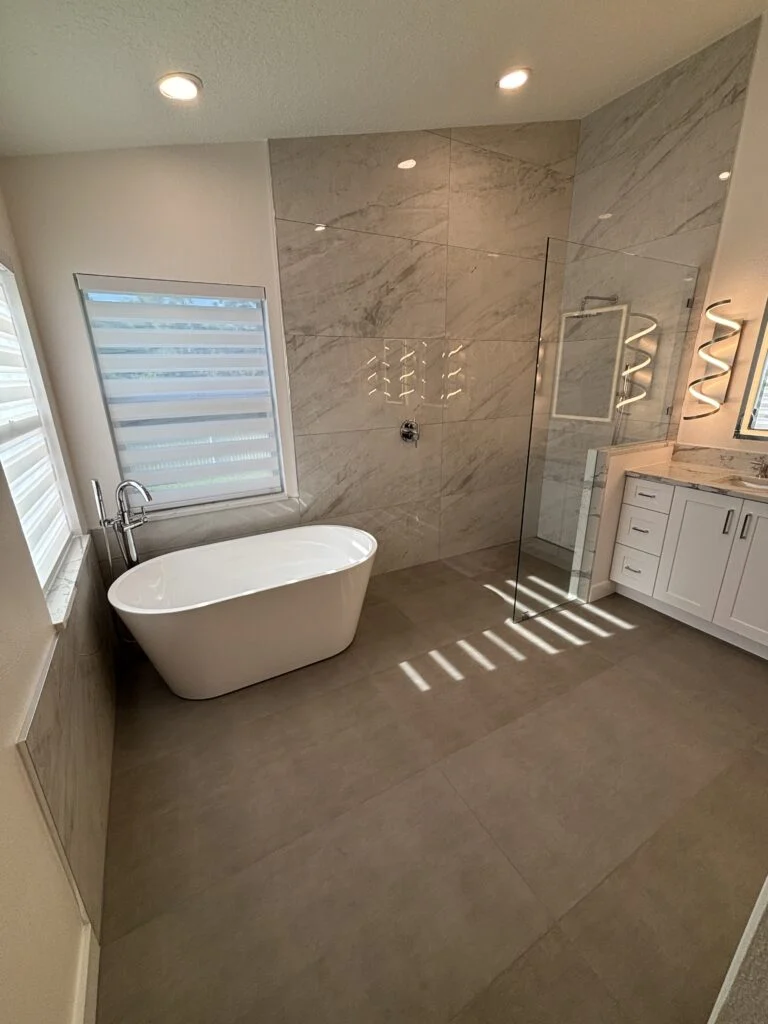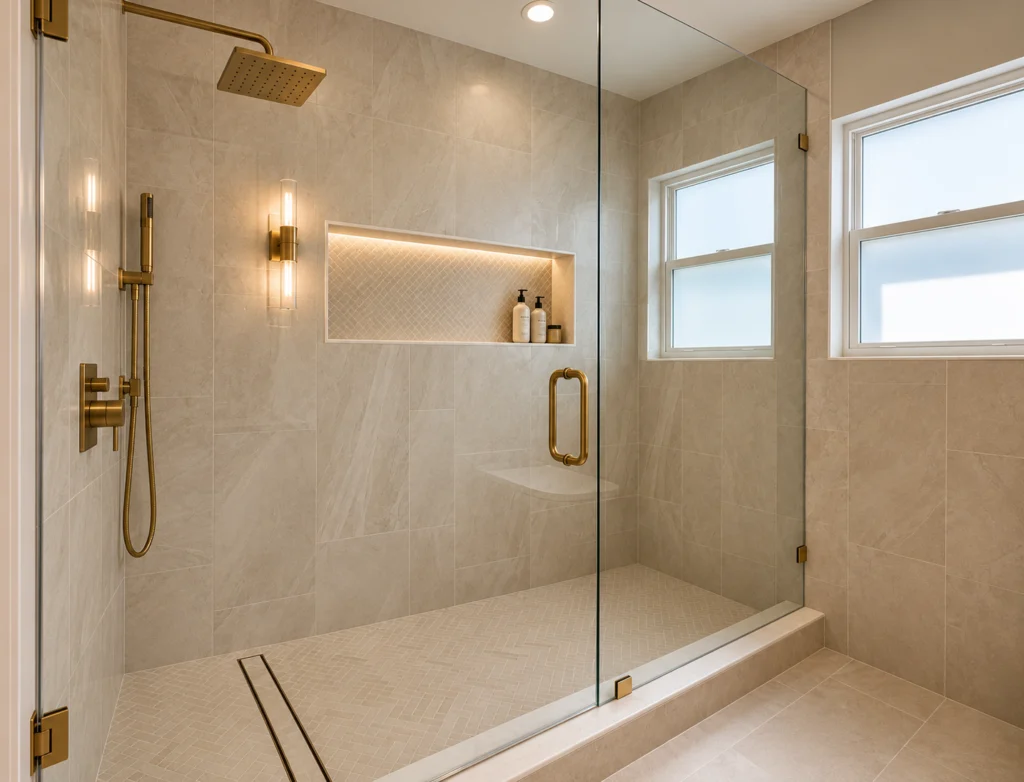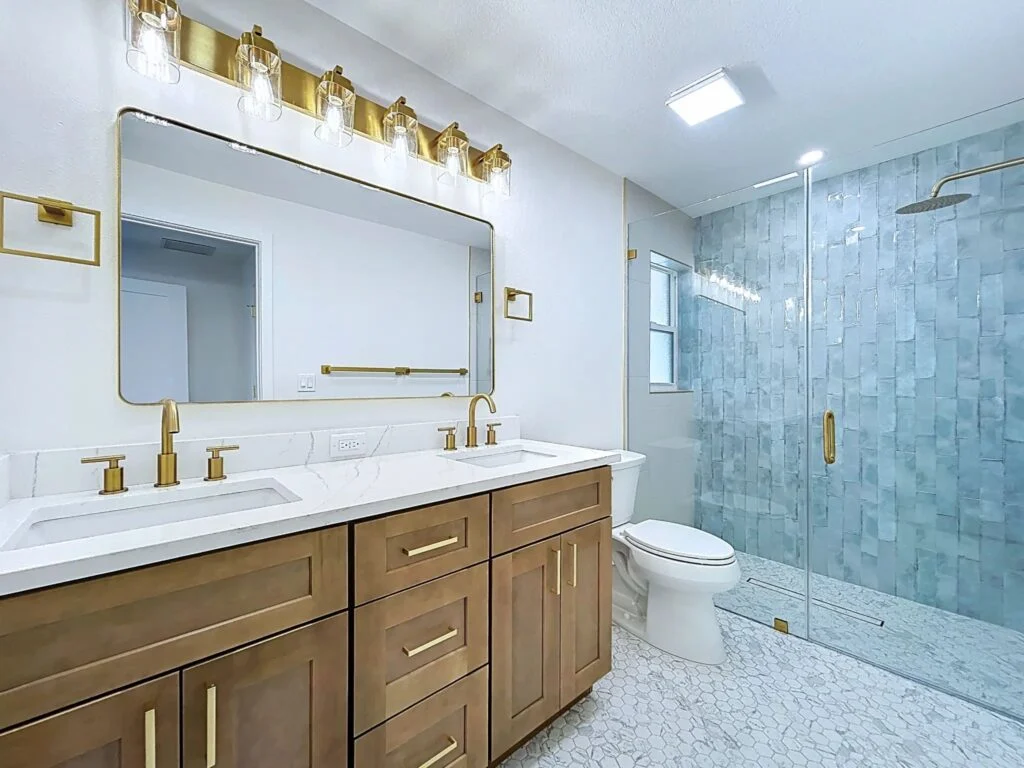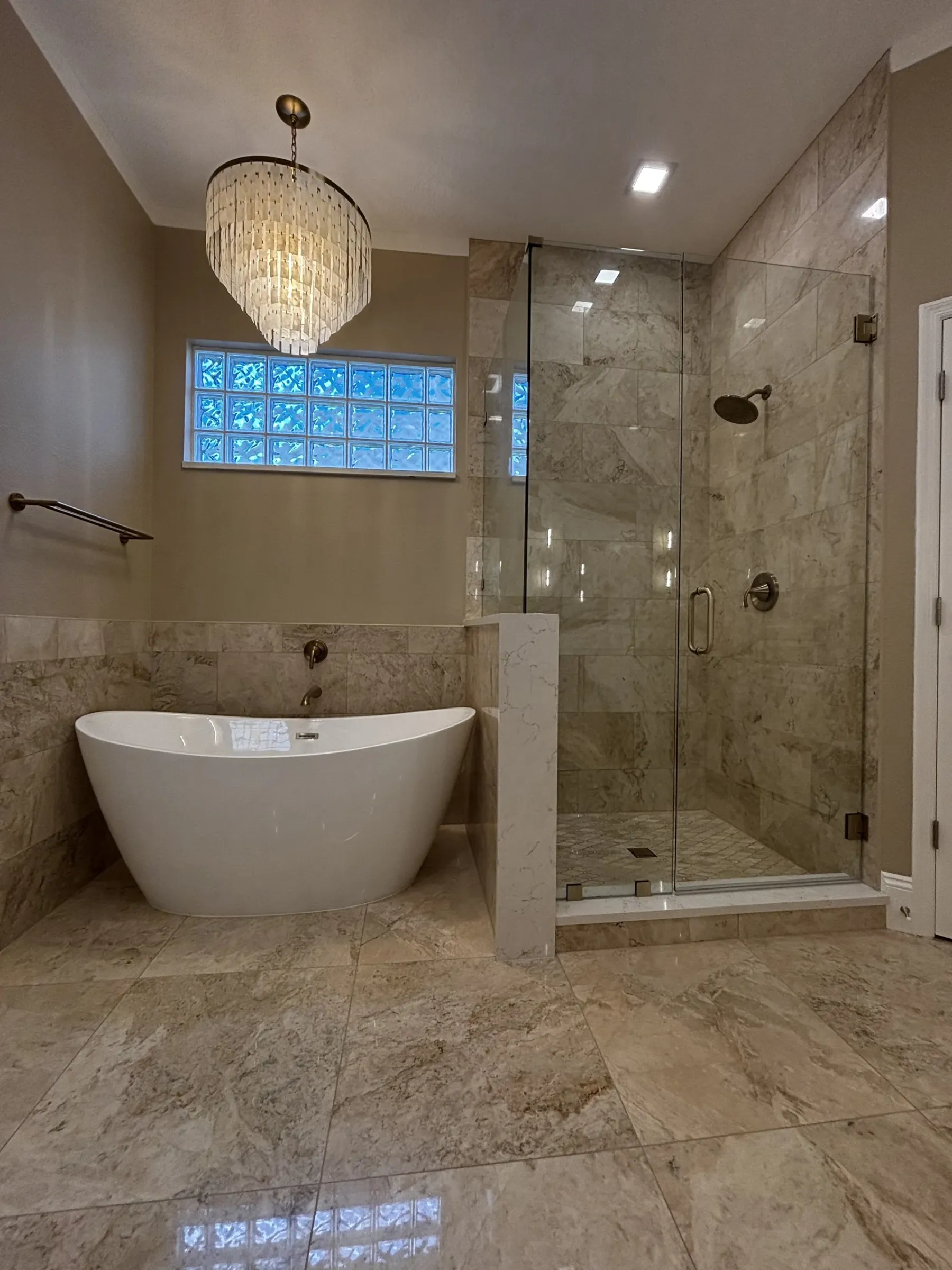

The short answer: plan a bathroom remodel in this order: decide what problem you’re solving, choose the scope (keep the tub, convert to a shower, or a full primary bath), set a budget that matches that scope, make your selections before demolition, then build. With Bayshore Remodels, hall baths start at $17,000 for a tub with a new tile surround (no shower glass) when you supply tile and fixtures (most around $21,000 when we supply them), tub-to-shower conversions run $23,000–$28,000, and primary bathrooms $32,000–$45,000. Most take 3 to 4 weeks on site. This guide walks through each planning decision and what it does to the price.
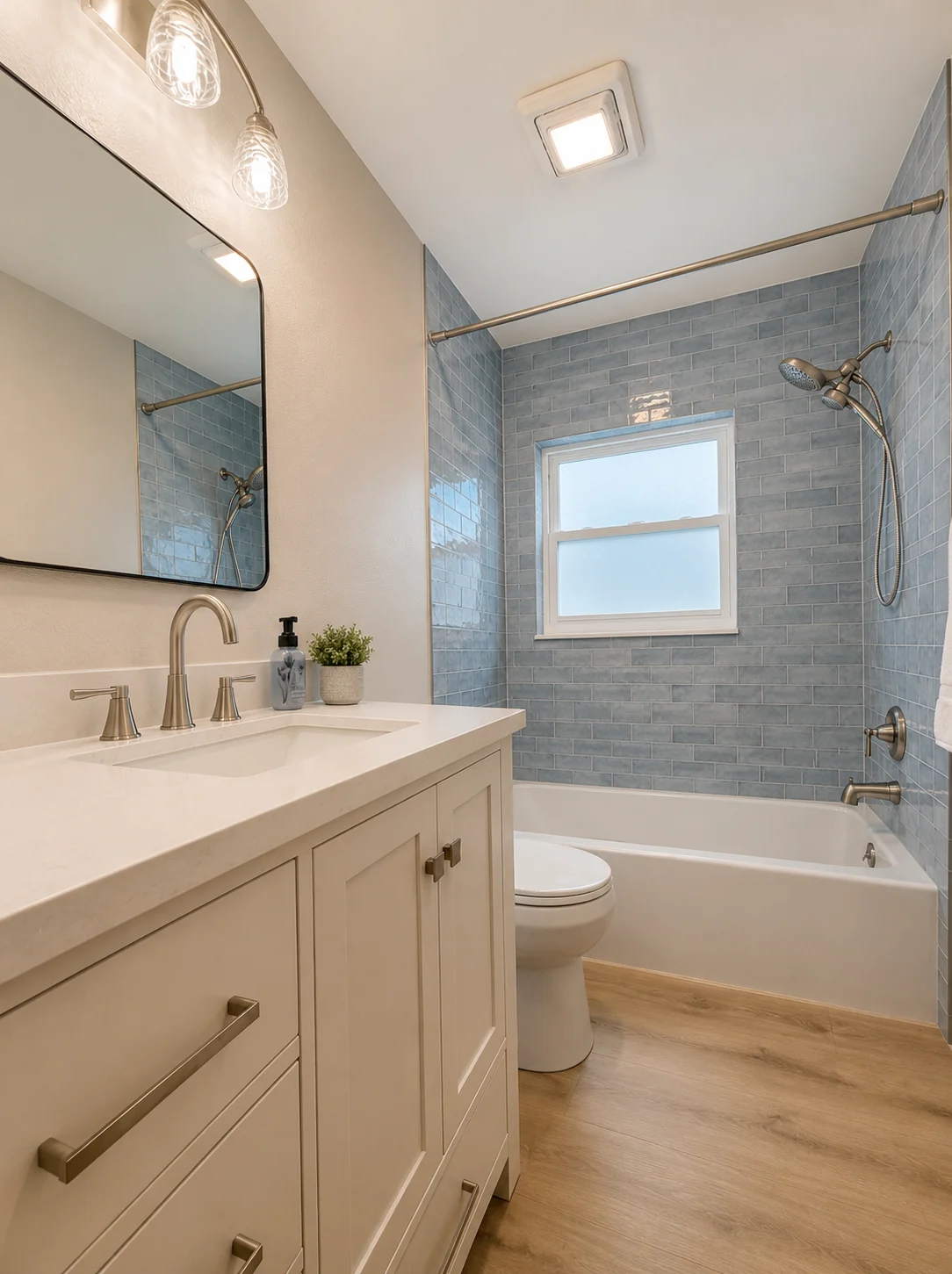
Step 1: Name the problem you’re solving
The best bathroom plans start with what doesn’t work, not with a picture of a spa. Common ones:
- Getting in and out of the tub is hard, now or in a few years. That points to a walk-in shower; see aging-in-place bathroom design.
- Two people, one sink. A double vanity needs about 60 inches of wall; if you don’t have it, a wider single vanity with more drawer space may be the better fix.
- Not enough storage. Drawers in the vanity, a recessed medicine cabinet or a shower niche usually solve this without moving walls.
- Mold, peeling paint or a musty smell. That’s often ventilation. A properly vented fan belongs in the plan.
- It just looks dated. Then the question is how much has to change. Sometimes it’s the whole room; sometimes it’s a vanity and lighting.
Step 2: Pick the scope
| Scope | What it usually means | Bayshore price |
|---|---|---|
| Hall bath, keep the tub | Tub stays; new tile surround and waterproofing, vanity, toilet, floor, lighting | From $17,000 (no shower glass) if you supply tile and fixtures; most around $21,000 if we supply them |
| Tub-to-shower conversion | Tub out; tiled, waterproofed walk-in shower with glass | $23,000–$28,000 |
| Primary bathroom | Large walk-in shower, double vanity, glass, tile throughout | $32,000–$45,000; more with a curbless shower, freestanding tub or moved plumbing |
Your estimate should say whether materials are supplied by you or by us (usually through written allowances), because it changes the total. For a line-by-line example, see what a hall bathroom remodel costs.
Bathroom remodels at Bayshore: hall baths keeping the tub run $17,000–$21,000, tub-to-shower conversions $23,000–$28,000, and primary bathrooms $32,000–$45,000. Once work starts, most bathrooms take 3 to 4 weeks on site.
Typical ranges from our recent projects. Your written estimate, built after we see your space, is what your project is priced on.

Step 3: Decide what stays where
This is the single biggest cost lever. Keeping the toilet, drain and vanity plumbing in place keeps the job simpler. Moving them on a slab home means cutting concrete, which adds plumbing, concrete and inspection time. A curbless (no-step) shower also means recessing the slab. None of these are bad choices; just make them knowing the cost.
Step 4: Make your selections before demolition
A bathroom shouldn’t sit gutted waiting on a vanity. Before work starts, choose:
- Three tiles: shower walls, a smaller tile for the shower floor (so it can follow the slope to the drain), and the bathroom floor.
- Shower valve and trim, set at rough-in, long before tile.
- Vanity, top and faucet. Confirm the size and where the drain lands.
- Toilet, mirror, lighting, fan and accessories.
- Glass style: swing door, slider or fixed panel. Glass is measured after tile.
If you’re thinking about buying some of these yourself, know who handles returns, damage and late deliveries before you order.
Step 5: Understand how the shower is built
What makes a shower last is the part you never see: the pan sloped to the drain, a water-resistant backer, and a waterproof membrane sealed at every seam and niche. Ask any contractor which system they use. We walk through our build order in the hall bath cost article.
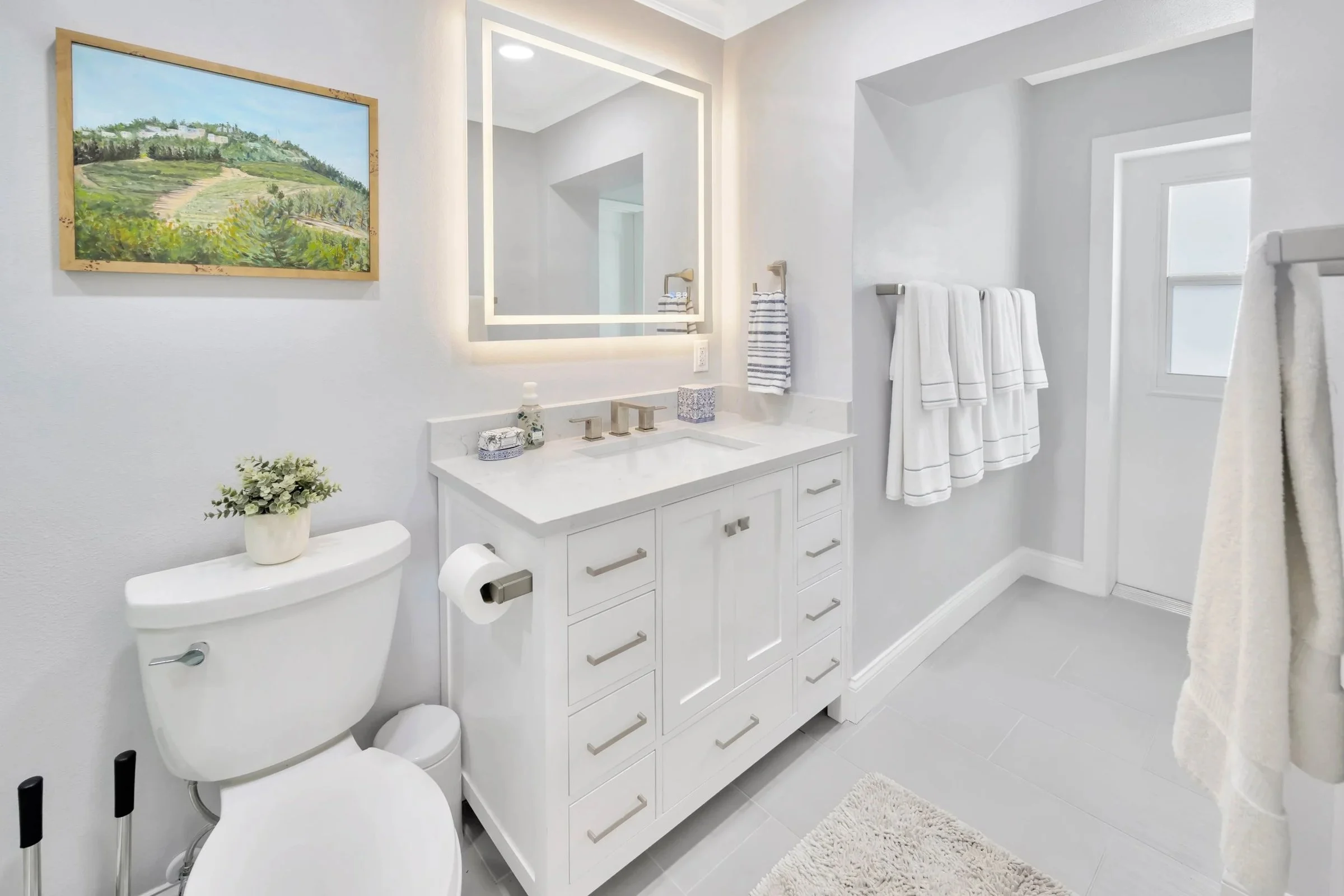
Step 6: Plan the schedule
Most bathrooms take 3 to 4 weeks on site: demolition, plumbing and electrical rough-in, shower pan and waterproofing, tile, then vanity, fixtures and glass. Permitted work adds inspection stops. Design, selections and ordering happen before that clock starts. See how long a bathroom remodel takes. If it’s your only bathroom, plan where you’ll shower for those weeks.
Style choices that hold up
Large-format porcelain with fewer grout lines is easier to clean than small tile. Satin or brushed fixture finishes hide water spots better than polished. A wall-hung or furniture-style vanity makes a small bathroom feel bigger. Pick what you like; just know that very busy tile patterns and bold colors date faster than the room itself.
When a full remodel isn’t necessary
If the tile is sound and only the grout is stained, regrouting may be enough. If only the vanity bothers you, replace the vanity. If the bathroom cabinets are solid and you just want a new color, refinishing or refacing works on vanities too.
Frequently asked questions
How long does a bathroom remodel take?
Most take 3 to 4 weeks on site. Primary bathrooms with custom glass or moved plumbing can take longer.
Will a bathroom remodel increase my home’s value?
Updated bathrooms matter to buyers, but how much of the cost comes back depends on the house and the market, so don’t plan around a fixed return. Plan around how the room needs to work.
Can you remodel a small bathroom?
Yes. Small bathrooms are mostly about fit: vanity depth, door swing and shower size. See our planning notes above.
We remodel bathrooms across Pinellas, including Clearwater, Belleair, Seminole, Indian Rocks Beach, Dunedin and Palm Harbor. When you’re ready, book a free consultation. Bring photos of what you like and a list of what bothers you about the room you have, and we’ll help you match the scope to the budget. More on our bathroom remodeling page.