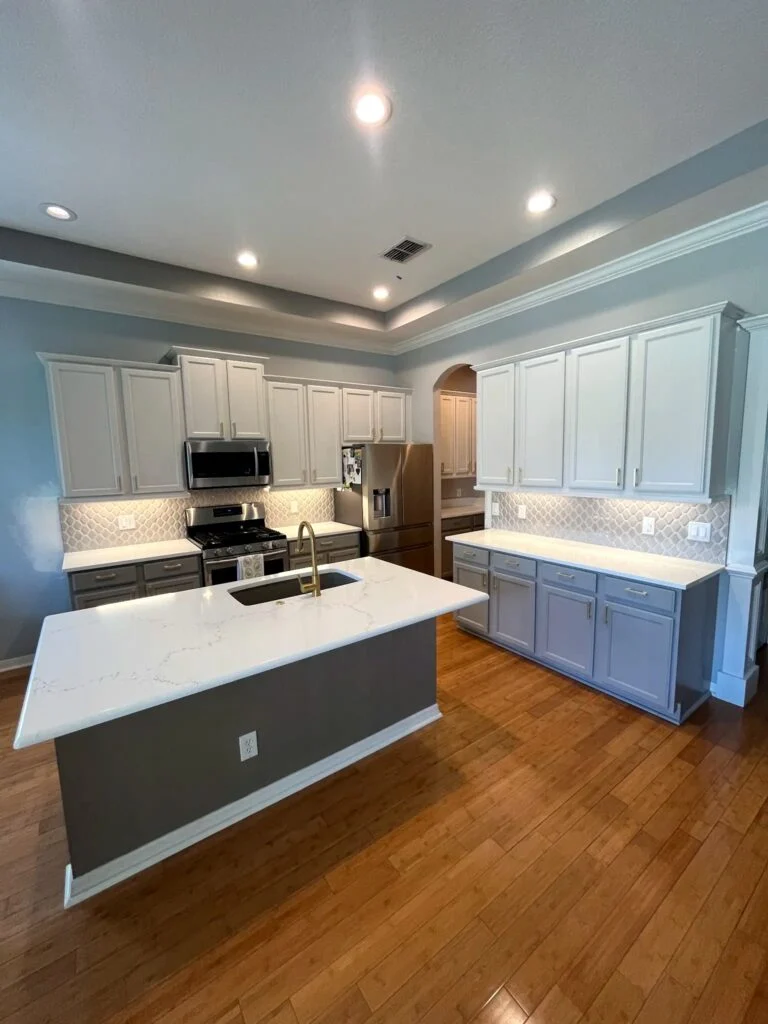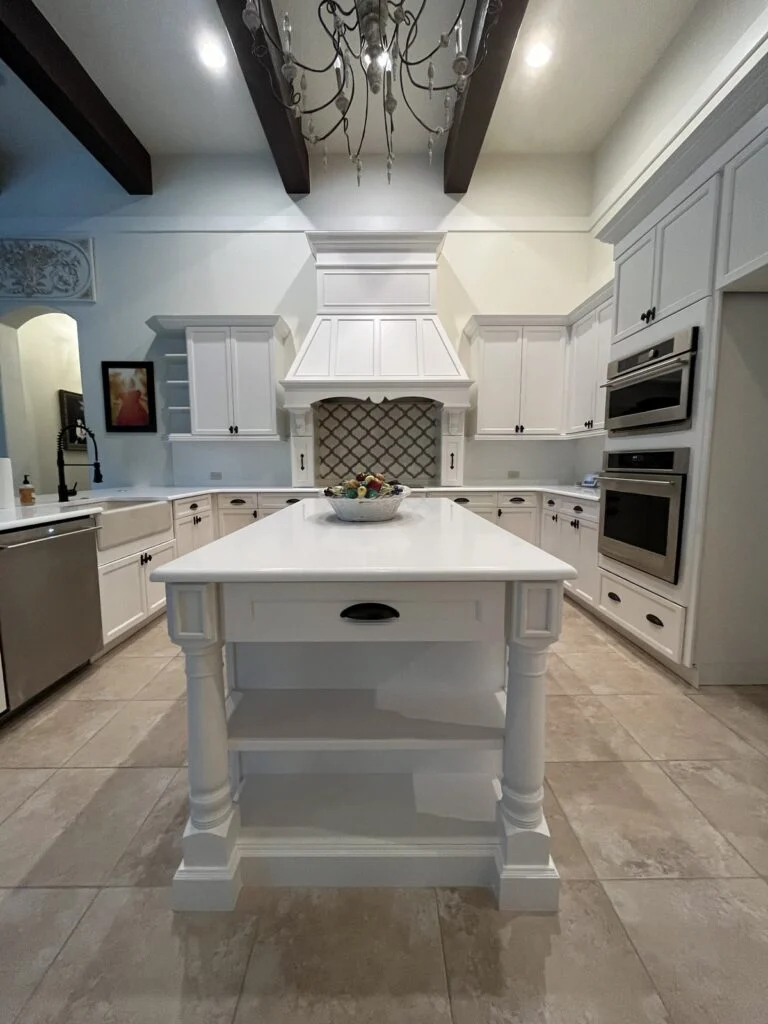
Refinished cabinets don’t need much: wipe them with warm water and a little dish soap, dry them, keep water and steam off the doors near the sink and range, and go easy for the first couple of weeks while the finish fully cures. What hurts them is harsh cleaners, scrubbing pads, standing water and doors that rub. Here’s the routine I give every homeowner after we refinish their kitchen, plus what to do when something does get chipped.
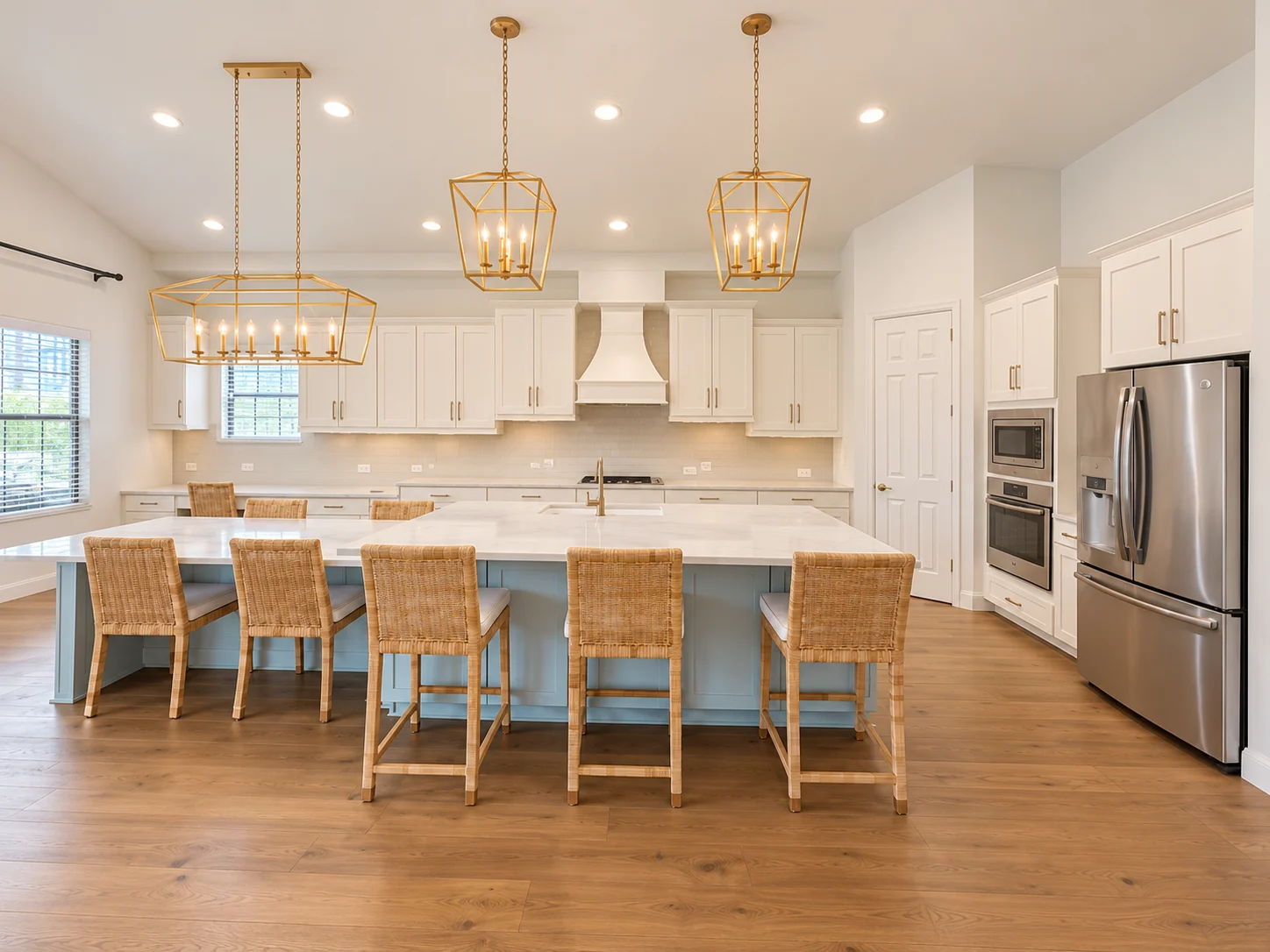
What should you do in the first two weeks?
A sprayed cabinet finish feels dry within hours, but it keeps hardening for a couple of weeks. During that time:
- Open and close doors and drawers gently, using the handles.
- Don’t hang wet dish towels over doors.
- Skip cleaners entirely unless something spills. A damp cloth is enough.
- Don’t put tape, stickers or adhesive hooks on the finish.
- If a door sticks or rubs, tell us so we can adjust the hinge instead of forcing it.
How should you clean refinished cabinets?
Keep it simple. Once a week or as needed:
Cabinet refinishing at Bayshore starts at $5,000. Most kitchens run $8,000–$10,000 and large kitchens $11,000–$15,000, with 5 to 7 working days on site. A second color for a two-tone look is a $500 add-on, and the sprayed finish carries a 2-year warranty against blistering and peeling.
Typical ranges from our recent projects. Your written estimate, built after we see your space, is what your project is priced on.
- Mix warm water with a few drops of mild dish soap.
- Wipe with a soft microfiber cloth, wrung out well so it’s damp, not wet.
- Pay extra attention around the handles and the doors near the range, where grease and hand oils build up.
- Dry with a clean cloth.
Don’t use: abrasive pads, melamine “magic” sponges, bleach, ammonia, strong citrus or kitchen degreasers, furniture polish or wax. They can dull or soften the finish, and polish leaves a film that attracts grime. If something won’t come off with soap and water, ask us before trying something stronger.
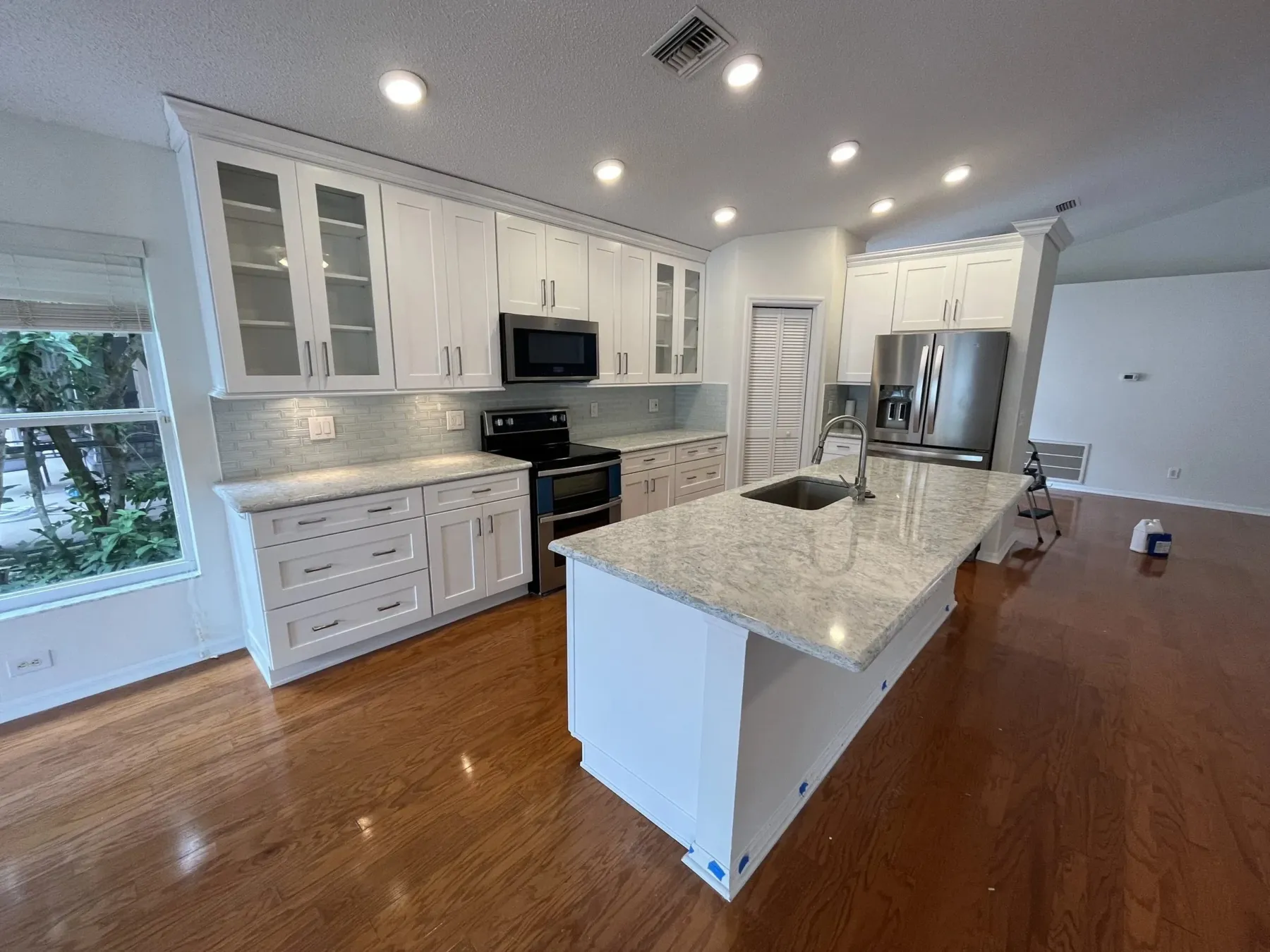
Where do cabinets take the most wear?
- Under and around the sink. Wet hands, drips and towels. Wipe up water instead of letting it sit, and fix leaky faucets or supply lines quickly.
- Next to the range and dishwasher. Heat and steam. Run the range hood when you cook, and let the dishwasher cool a few minutes before opening it all the way next to cabinet doors.
- Door and drawer edges by the handles. That’s where fingers and rings hit. Using the handles instead of grabbing edges saves the finish.
- Lower cabinets. Shoes, chairs, vacuums and pet bowls. A little care here goes a long way.
Does Florida humidity affect refinished cabinets?
It can. High humidity doesn’t hurt a cured finish much on its own, but moisture that gets behind a chip into bare wood can make it swell. Run your AC normally, use the range hood and bath fans, and touch up chips near the sink sooner rather than later. In a beach condo that sits closed up for months, a little air circulation helps everything in the house, cabinets included.
What should you do about chips and scratches?
Small chips happen in any kitchen. We leave a touch-up bottle of your exact color with every refinishing job for exactly this. Don’t sand the chip or grab a random can of paint; a mismatched product or sheen stands out more than the chip. Instead:
- Wipe the spot clean and let it dry.
- Dab a small amount from your touch-up bottle into the chip with a fine artist’s brush. Use several light coats, never one heavy coat. A heavy coat stays soft, sags and leaves a bump.
- Let each coat dry. As the touch-up builds up, lightly sand between coats with fine sandpaper, up to 320 grit, so it blends flat with the surrounding finish.
- Let it dry fully before using the door.
- If the damage is bigger than a nick, or you’re out of touch-up, send us a photo and we’ll tell you the best fix.
Every project carries our 1-year workmanship warranty, and our sprayed finishes carry a 2-year warranty against blistering and peeling. And after the job, you can put together a punch list and we’ll come back out to take care of it. We come back for warranty work too. See our warranty page.
How do you keep hinges and hardware from damaging the finish?
Loose hinges let doors sag and rub the frame, which wears through the finish. If a door starts to rub or doesn’t close evenly, a quick turn of the hinge adjustment screw usually fixes it. Tighten loose knobs and pulls, too, so they don’t spin and scratch the door. If you’re not sure which screw does what, we’re happy to show you.

When is it time to refresh them?
With good care, a properly prepped and sprayed finish lasts many years. If they start to look worn after a long time, a refresh is much less work than the first refinish, because the surfaces are already in good shape. If the boxes themselves are failing, like water damage under the sink, refacing or a kitchen remodel may make more sense. See how long cabinet refinishing lasts and refinish, reface or remodel.
Want to see every step? Here’s our full cabinet refinishing and refacing process, from shop-sprayed doors to mil thickness.
Frequently asked questions
What’s the best cleaner for refinished cabinets?
Warm water with a few drops of mild dish soap and a soft microfiber cloth. Dry afterward.
Can I use a magic eraser on painted cabinets?
No. Melamine sponges are a mild abrasive and can dull or wear through the finish.
How long until I can use my kitchen normally?
Right after we finish, with a little care for the first couple of weeks while the finish fully hardens.
Can you touch up a chip?
Yes. Use the touch-up bottle we leave with every job for small nicks. For anything bigger, send us a photo and we’ll tell you the best fix.
Where do you refinish cabinets?
Across Pinellas and the Tampa Bay area. Local pages: Largo, Clearwater, Seminole, Palm Harbor, Dunedin and Madeira Beach.
Thinking about this for your own cabinets? Refinishing with us starts at $5,000. Here’s how we do it and what it costs, or book a free consultation and I’ll tell you straight whether it’s the right fit. Browse colors in our Design Portal.