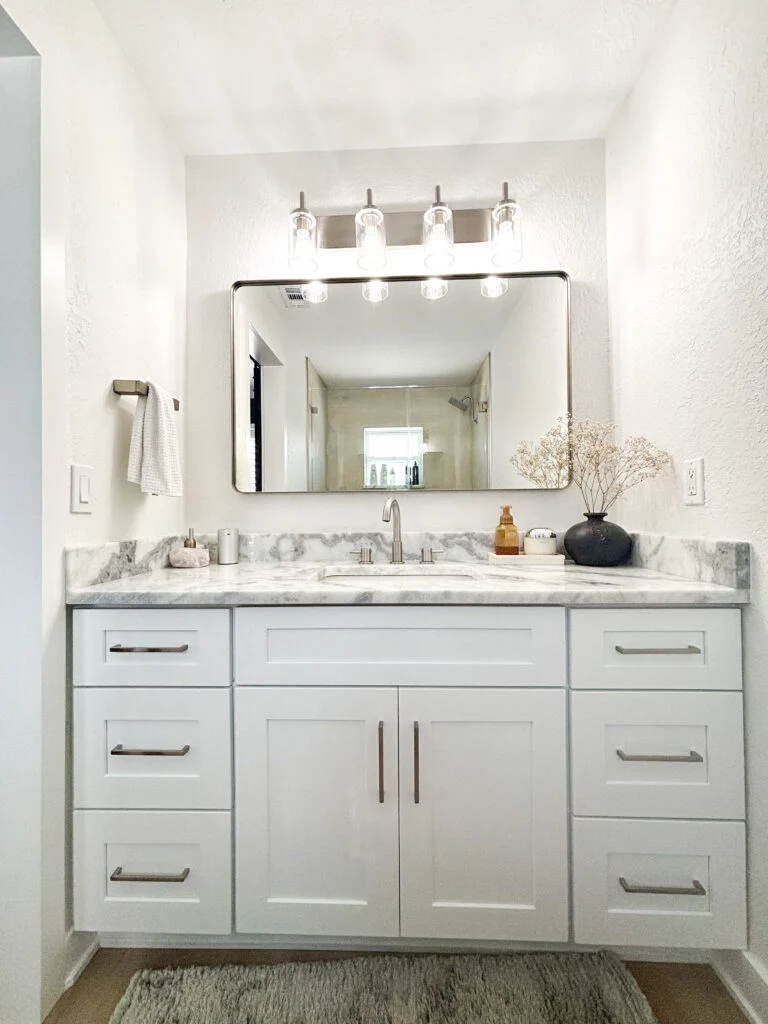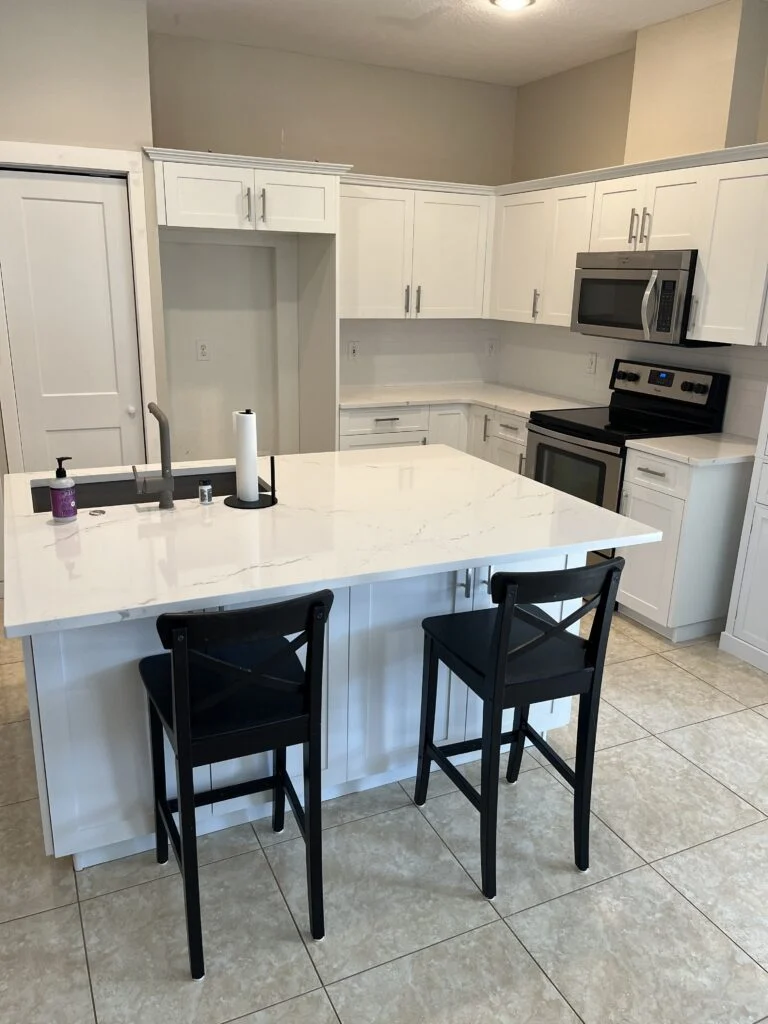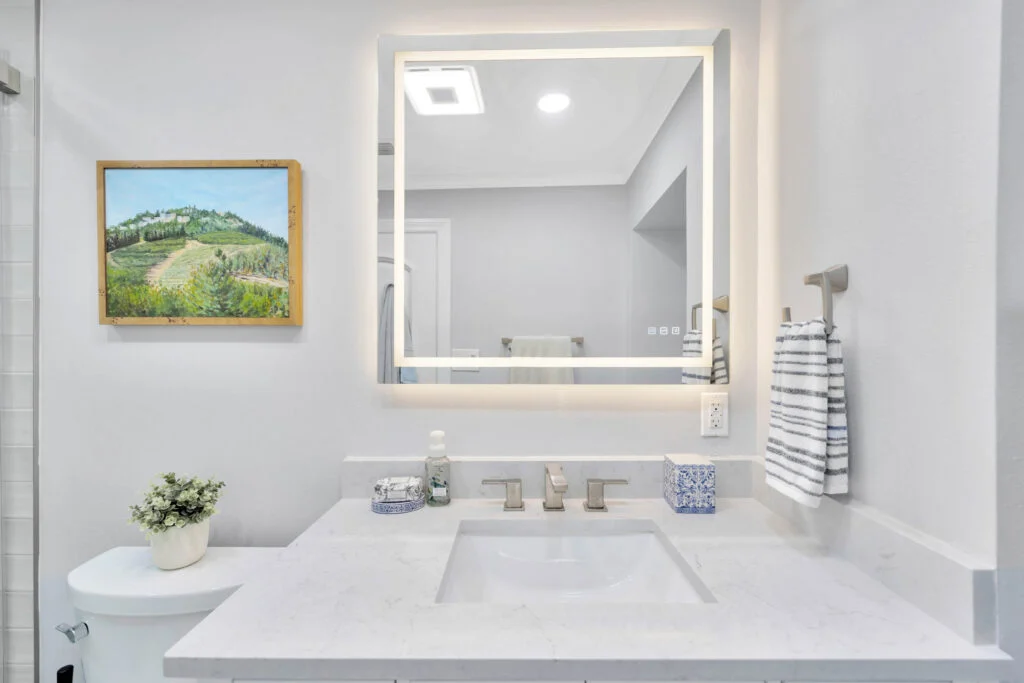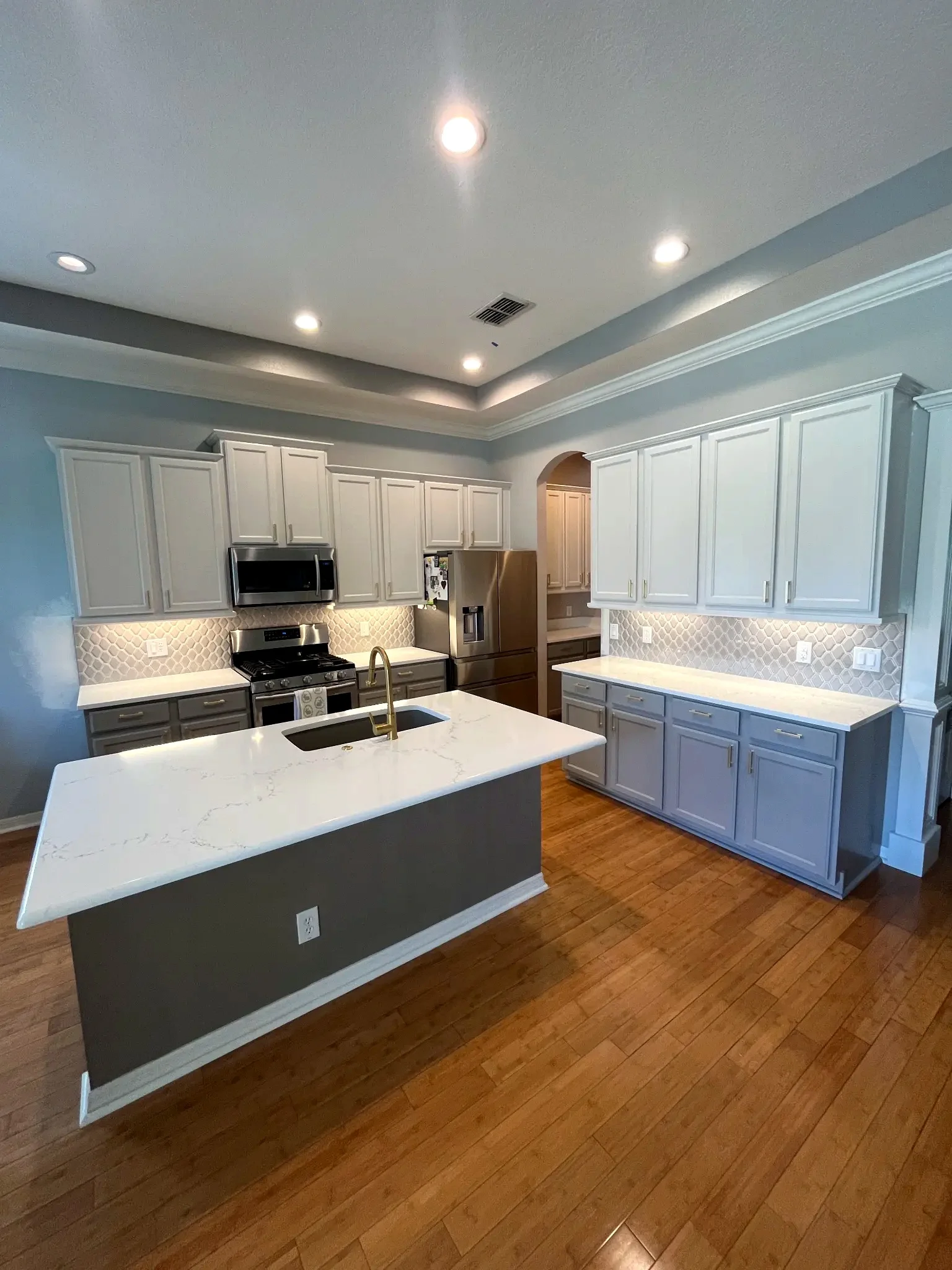

Professional cabinet refinishing is more than paint. Doors and drawer fronts come off and are sprayed in a shop with a commercial-grade coating, after every surface is degreased, sanded and primed. At Bayshore it starts at $5,000 (most kitchens $8,000–$10,000), takes 5 to 7 working days on site, and carries a 2-year warranty against blistering and peeling.
“Cabinet painting” and “cabinet refinishing” get used interchangeably, but the work behind them can be very different. Real refinishing means the doors come off, everything is degreased and sanded, a bonding primer goes on, and a commercial-grade finish is sprayed in thin, even coats. A lot of “painting” quotes are wall paint brushed and rolled onto cabinets that were barely cleaned. Both can look fine the first week. Only one still looks good in a few years. Here’s how to tell what you’re being quoted, what our process includes, and when neither is the right answer.
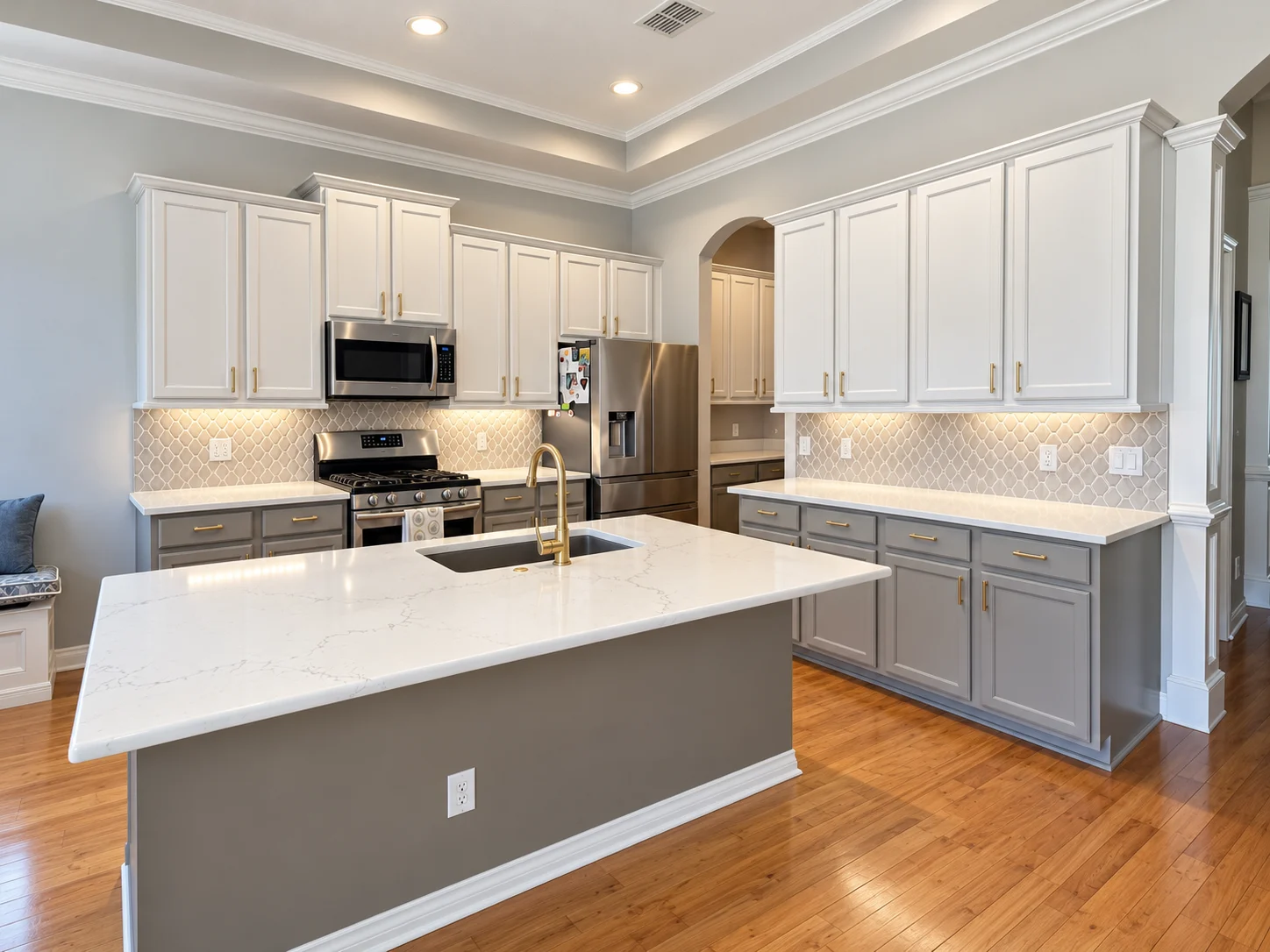
What’s the real difference between refinishing and painting?
It comes down to four things: prep, primer, the finish itself, and how it’s applied.
- Prep: refinishing starts with degreasing and sanding every surface. Quick paint jobs often skip straight to color.
- Primer: refinishing uses a bonding primer made to stick to slick cabinet surfaces. Paint jobs often use no primer or a wall primer.
- Finish: refinishing uses a hard, commercial-grade cabinet coating. Paint jobs often use regular wall paint, which stays soft and can stick to itself when doors close.
- Application: refinishing is sprayed in thin, even coats, with light sanding between them. Brushing and rolling leave brush marks and texture you can feel.
What does our refinishing process include?
- Protect the kitchen. Counters, floors, appliances and walls are covered and sealed off before anything is sanded or sprayed.
- Doors and drawer fronts go to our shop. Every door and drawer front is labeled, removed and taken out of the house to be sprayed in our shop. Spraying them flat, in a controlled space, gives a better finish than spraying them hanging in your kitchen.
- Fill holes and dings. Old hardware holes, dings and open seams get filled at the very start of the job.
- Chemical sand. Every surface is wiped down with denatured alcohol or lacquer thinner, depending on the existing finish. That cuts the grease and breaks the surface so the primer can bite.
- Physical sand. Then everything is sanded by hand and machine.
- First coat of primer. A shellac-based primer that blocks tannins and stains from bleeding through, which matters a lot on oak and cherry.
- Fill again. Primer shows every spot the first fill missed, so we check and fill again every time we prime. If you’re changing hardware, the old holes get filled the same way and we drill for the new pulls.
- Second coat of primer, then sand. The second coat seals the repairs, and sanding gives the finish a smooth, flat base.
- First finish coat, then sand. We use a one-part pre-catalyzed finish, sprayed.
- Second finish coat. The final coat goes on over a sanded surface for the smoothest result.
- Frames get the same process. The cabinet boxes and face frames stay in place, protected and masked, and get the same chemical sand, physical sand, two primer coats and two finish coats, with sanding in between.
- Reinstall and adjust. Doors and drawers come back from the shop and go back on, hinges are adjusted, new hardware goes on, and we walk the kitchen with you. We leave you a touch-up bottle of your color for small nicks down the road.
Want to see every step? Here’s our full cabinet refinishing and refacing process, from shop-sprayed doors to mil thickness.
Why does mil thickness matter?
Mil thickness is how thick the dried finish is, measured in thousandths of an inch. Too thin, and the finish wears through at the edges and around handles. Too thick, and it can stay soft, crack, chip in sheets or look gloppy in the corners of shaker doors. The goal is to build the right film for the product, not just keep piling on paint. That’s why we use two primer coats and two finish coats, sprayed thin, and sand between each one. Every sanding step knocks down dust and texture so the next coat lays flat and bonds to the one under it. It takes longer than rolling on paint, and it’s the reason the finish holds up.
Most kitchens take 5 to 7 working days. With new countertops and a backsplash, plan on 2 to 3 weeks. No demolition, and no permit.
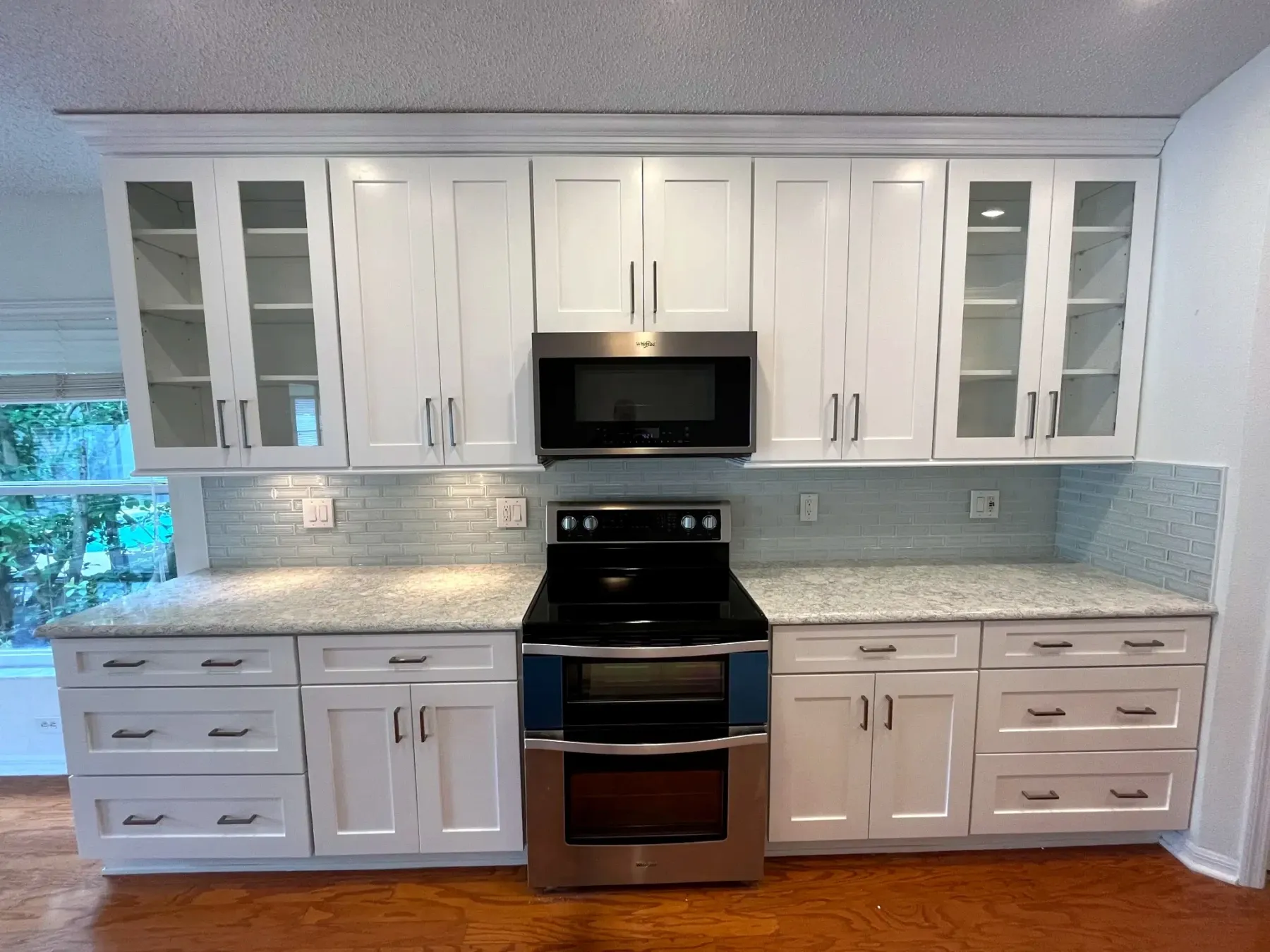
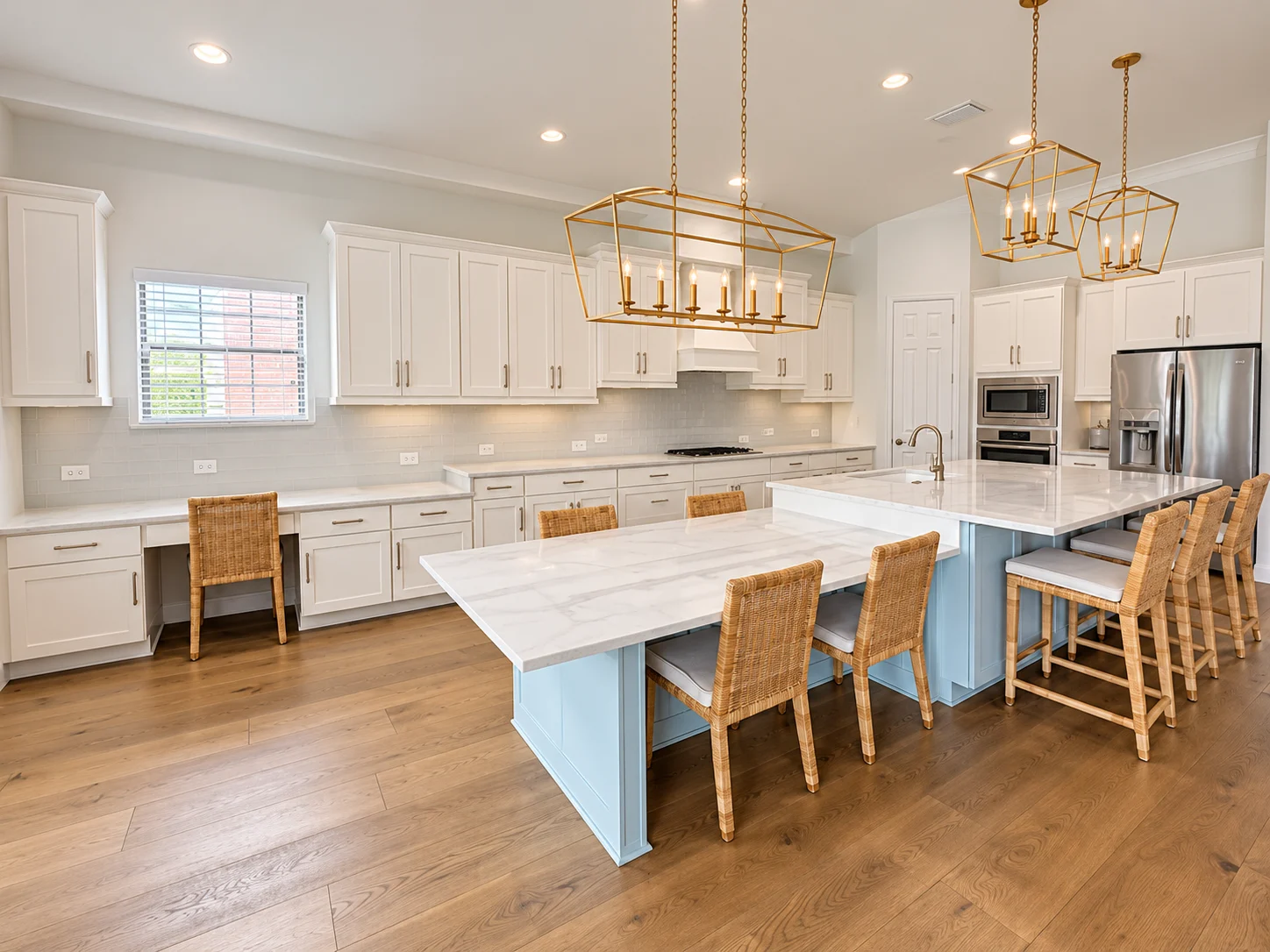
How do you tell which one you’re being quoted?
Plenty of quotes say “refinishing” when the work is really a brush-and-roll paint job. Before you sign, ask:
- Is it sprayed or brushed? Ask to see a sprayed sample door.
- Are the doors and drawers removed? Finishing them off the boxes is the only way to coat every edge.
- What primer and topcoat? You want a bonding primer and a cabinet-grade topcoat, not wall paint. Get the product names in writing.
- Do you sand between coats? That’s what makes the finish feel smooth instead of gritty.
- How is the kitchen protected? Everything that isn’t being finished should be sealed off before spraying.
- What happens if it chips? Ask how touch-ups are handled and what the warranty says.
If the answers are vague, the work usually is too. A cheap paint job that peels in a year costs more than doing it right once.
What does refinishing cost compared with the alternatives?
- Cabinet refinishing: from $5,000. Most medium kitchens $8,000 to $10,000; large kitchens $11,000 to $15,000. Two-tone adds about $500.
- Cabinet refacing: from $7,000. Most medium kitchens $10,000 to $12,500. You get new doors and drawer fronts, and we finish the existing boxes to match.
- New cabinets in a full kitchen remodel: from $28,000, with most full kitchens $36,000 to $50,000.
A cheaper brush-and-roll job will usually come in lower than refinishing. Just compare what’s actually included before you decide.
When is neither one the right answer?
Refinishing and painting only make sense when the cabinet boxes are solid. If there’s water damage under the sink, doors that are coming apart, or a layout that doesn’t work, a new color just covers the problem. That’s when refacing or a kitchen remodel is the better spend, and I’ll tell you which one when I look at your kitchen. The comparison is in refinish, reface or remodel.
How do you pick a color?
Warm whites, greiges, sage greens and navy islands are all popular right now. Look at a sample door in your kitchen’s light, next to your countertop and floor, before you commit. You can browse cabinet colors in our Design Portal, and our top cabinet colors post shows real kitchens.
Frequently asked questions
How long does cabinet refinishing take?
Most kitchens take 5 to 7 working days. With new countertops and backsplash, plan on 2 to 3 weeks.
Will refinished cabinets chip?
A properly prepped and sprayed finish is very durable. Like any finish, a hard knock can chip it, and touch-ups are simple. See how long cabinet refinishing lasts.
Can I change the hardware when you refinish?
Yes. We can fill the old holes and drill for new pulls so the new hardware lines up cleanly.
Can you refinish oak cabinets?
Yes. The shellac-based primer keeps the oak’s tannins from bleeding through. Some grain texture may still show through the finish, which many people like.
Where do you refinish cabinets?
Across Pinellas and the Tampa Bay area. Local pages: Largo, Clearwater, Seminole, Palm Harbor, Dunedin and Belleair.
Want a straight answer on your kitchen? Call us at 813-489-1552 or book a free in-home estimate. Bayshore Remodels is licensed (CRC1335471) and insured, with 500+ projects across Pinellas and Tampa Bay since 2021.